


It’s completely normal for tiny food particles to collect around natural teeth or dental implants throughout the day — that’s part of why regular brushing, flossing, and checkups matter. But for some people, the shape and alignment of their teeth make it harder than usual to keep that area properly clean, even with a good oral hygiene routine. So what does an infection around a dental implant actually look like, and why can it be harder to spot than one around a natural tooth?
Here’s what’s going on underneath the surface.
How Gum Tissue Attaches to Teeth and Implants
To understand how infections develop, it helps to understand how gum tissue attaches differently to natural teeth compared to implants.
Around natural teeth:
- Collagen fibres run from the gum tissue and periodontal ligament and insert directly into the tooth’s root (cementum), anchoring firmly at an angle
- This creates a tight, resilient seal that acts as a physical barrier against bacteria working their way down
- Natural teeth also have a periodontal ligament with nerve endings, so inflammation or pressure is usually felt early — which is why a sore or irritated tooth tends to get noticed and treated quickly
Around dental implants:
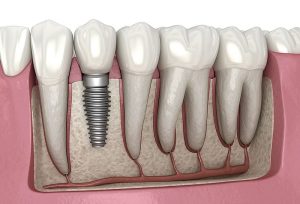
- There’s no periodontal ligament and no root cementum, since the implant is fused directly to bone
- The collagen fibres in the gum tissue run parallel to the implant surface instead of inserting into it, which creates a weaker, less resistant seal
- Blood supply to this tissue is also reduced compared to tissue around a natural tooth, which can slow healing and immune response
- Because there’s no periodontal ligament to sense pressure or irritation, early inflammation around an implant often causes little to no discomfort — which is exactly why it can go unnoticed without regular dental checkups
When Inflammation Becomes Infection
Healthy gum tissue around a well-maintained implant shows no signs of infection. But if bacterial plaque builds up around the implant — often due to food particles, biofilm, or gaps in oral hygiene — the tissue can become inflamed. This is known as peri-implant mucositis, and at this stage, it’s usually reversible with a professional clean and improved home care.
Left untreated, it can progress to peri-implantitis — a more serious infection that affects not just the gum tissue but the bone supporting the implant. Because inflamed tissue is less able to fight off bacteria, the problem tends to worsen in a cycle: more bacteria leads to more inflammation, which further weakens the tissue’s ability to stay attached to the implant.
Warning Signs to Watch For
Since discomfort isn’t always a reliable signal with implants, it’s worth knowing the other signs:
- Redness, swelling, or puffiness around the implant
- Bleeding when brushing or flossing near the implant
- Bad breath or a bad taste that doesn’t go away
- A feeling of looseness in the implant or crown
- Pus or discharge around the gumline
- Visible recession of the gum around the implant
Why Regular Checkups Matter
You can’t always see or feel an infection developing around your own implant, especially in the early stages. A dentist can check for early signs using specialised tools and imaging that aren’t available at home. This is especially important if your teeth alignment or implant placement makes the area naturally harder to keep clean.
If peri-implantitis isn’t caught and treated in time, the infection can progress to the point where the implant loosens, bone loss occurs, and ultimately the implant itself may need to be removed and replaced.
How to Protect Your Implants
- Brush and floss around implants just as carefully as natural teeth — ask your dentist about specific tools like interdental brushes or water flossers if the area is hard to reach
- Keep up with regular dental checkups and professional cleans, even if nothing feels wrong
- Don’t ignore bleeding gums or bad breath around an implant — get it checked early, while it’s still just mucositis
- If you smoke, quitting significantly reduces your risk of peri-implantitis
Contact Us
If you have dental implants, or you’re considering All-on-4 treatment, our team can help you understand your risk factors and put a maintenance plan in place to protect your investment long-term. We offer comprehensive, competitively priced implant treatment in Auckland. Get in touch with our team to know more, or book a consultation to discuss your options.